
Your Dog's Reactivity Can Improve Faster Than You Think
Learn the same evidence-based methods Dr. Ian Dunbar has used to help thousands of dogs overcome fear, barking, lunging, and leash reactivity. Save 75% through June 26.
If your dog barks, growls, lunges, or loses control around other dogs or other specific triggers, it's easy to feel hopeless.
Many owners assume their dog is aggressive, stubborn, dominant, or beyond help.
But according to Dr. Ian Dunbar, the vast majority of reactive dogs are actually safe dogs struggling with fear, anxiety, frustration, or excitement.
Understanding that difference changes everything.
Has your dog ever inflicted a serious bite injury on a person or another dog?
If not, that's encouraging.
Most reactive dogs are not dangerous. They are fearful, anxious, frustrated, or overexcited—and those problems can often be improved surprisingly quickly with the right training.
The Reactive Dog Toolkit was designed specifically for reactive dogs that are not dangerous.
If your dog is dangerous, we strongly recommend working directly with a qualified professional who can evaluate your dog in person. The toolkit may still be helpful as a supplement to professional guidance.
Most reactive dog owners focus on stopping barking, growling, lunging, and pulling.
Unfortunately, many training methods focus only on suppressing those symptoms.
Dr. Dunbar takes a different approach.
Instead of asking, "How do I stop the behavior?" he asks:
"How do I change the dog's emotional response?"
The surprising part is that sometimes the fastest way to change a dog's emotions is to first change their behavior.
Watch:
Dogs constantly read our body language, tension, expectations, and emotions.
Many owners don't realize how much information they're communicating to their dogs.
In this next clip, Dr. Dunbar shares one of his favorite stories about reactivity—and why the owner's behavior often plays a bigger role than they realize.
Most reactive dogs don't suddenly become reactive overnight.
The problem often starts with subtle signs that owners dismiss as harmless:
But fear rarely gets better by itself.
What starts as avoidance and uncertainty can gradually become barking, growling, lunging, snapping, and aggression.
The sooner you address the problem, the easier it is to solve.
Watch Dr. Dunbar explain one of the most common mistakes dog owners make:
Stop guessing. Stop trying random training tips from the internet. The Reactive Dog Toolkit gives you a clear system for understanding your dog's reactivity, changing unwanted behaviors, and getting back to enjoying life together.
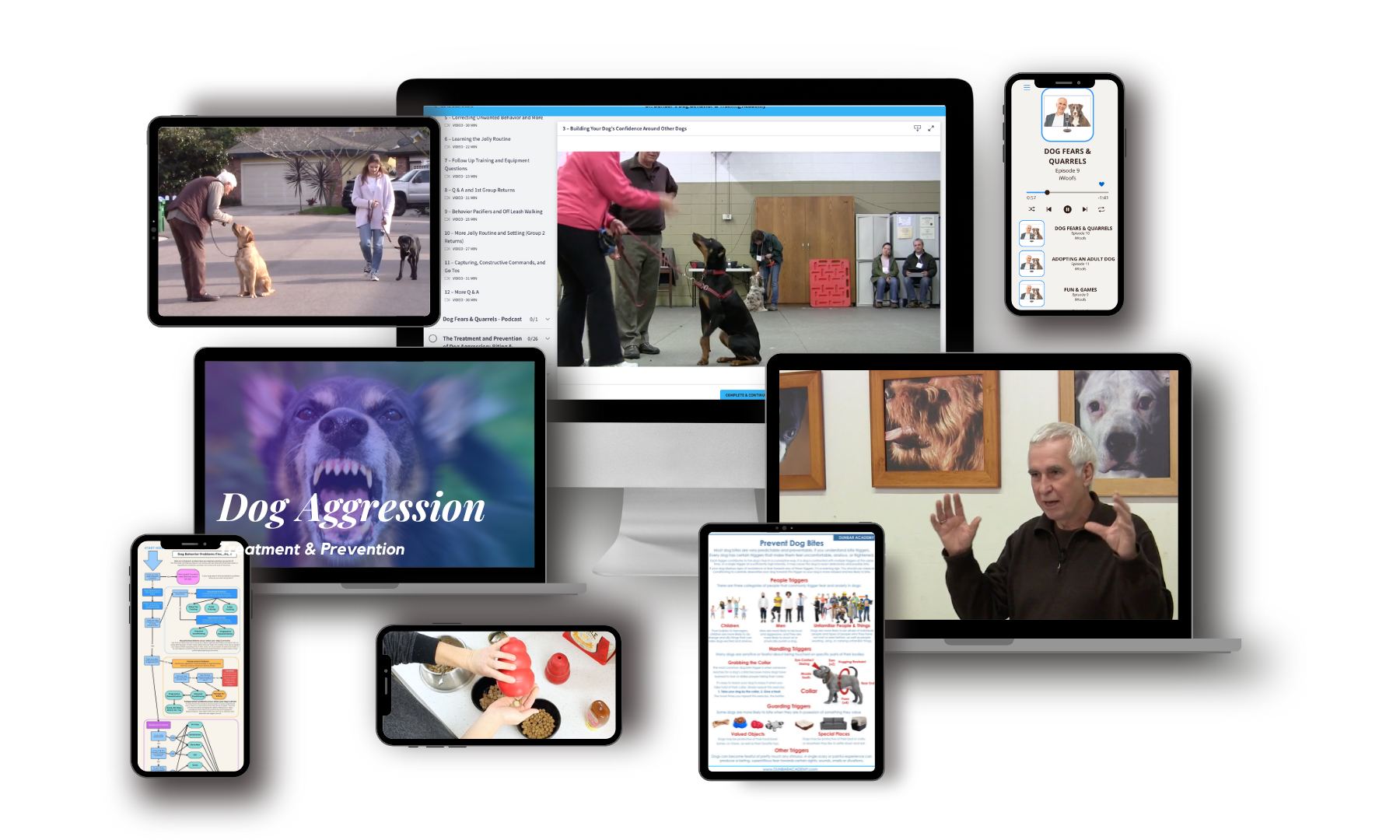
24+ Hours of Video Training
The Dog-Dog Reactivity Workshop (aka "The Growl Class")
Dr. Dunbar's Dog-Dog Reactivity Webinar
Step-By-Step Training Plan for Dog-Dog Reactivity
Downloadable Flow Charts & Training Resources
Audio & Video Podcasts
Lifetime Access
Most reactive dogs do not improve on their own.
Fear, anxiety, and frustration tend to spread.
The dog who reacts to one dog today may react to every dog six months from now.
The puppy who's "just shy" today may become fearful of strangers, children, or visitors later.
The sooner you address the problem, the easier it is to solve.
Save 75% through June 26. Regular Price: $200 - Save $151

“We can even go in the dog park now! I started with a 6 year old dog who drug me across the road and through a yard while going after another dog. That happened at least 3 times, one resulting in a fairly serious injury to me. After struggling for a month or more I finally came across Dunbar's courses. In about two months of Dunbar's approach, I have a completely different dog. On our walks, I can now seek out challenges for her so she can show me how non-reactive she has become 😁 I can take her anywhere and do anything I want to do. ”
 Annie B.
“Fabulous! Loaded with great demonstrations. The notes are fantastic. The explanations were repeated and demonstrated many times to let it really sink in. I would recommend this to any one with a barking and/or lunging dog. ”
 Janet B.
“Awesome, helpful, insightful! All of the information here and within Top Dog Academy is just absolutely epic. I wish I'd found it earlier in my life but I'm certainly going to make the most of it now. Everything you say makes so much sense, with the perfect level of explanation, terminology and instruction being used, along with humour to make you smile. This has given me the confidence and answers that I've sought for so long ”
 Melanie V.
“An invaluable resource. This was so, so useful to actually be able to see the dogs/handlers in action and be able to freeze and/or replay to watch for any subtle signs/body language. I've joined/listened to lots of webinars and read lots of books etc. about dog to dog reactivity but not had much chance to sit back and observe. Plus the notes and Ian's feedback during the workshop makes this an invaluable resource. Thank you. ”
 Emma R.
“Amazingly helpful! What a gift this course and training are to the world and to our pets. Thank you for your life's work, Ian. ”
 Susan S.
“Dr. Dunbar is an endless wealth of knowledge about dogs, their behavior, and how to manage the behavior of their humans! Great resource for dog trainers or dog owners wanting to get more out of their relationship with their dog.”
 Celia S.
Dr. Ian Dunbar pioneered modern puppy socialization and reward-based dog training. His books, seminars, and training programs have helped shape how millions of dog owners and professionals train dogs around the world.


Frequently Asked Questions
The Reactive Dog Toolkit is designed for dogs that bark, growl, lunge, pull on the leash, overreact around other dogs, people, or everyday situations. Most reactive dogs are not dangerous—they are fearful, anxious, frustrated, or overexcited. This toolkit shows you how to address the underlying emotions driving the behavior, not just suppress the symptoms.
Many owners see noticeable improvements within days of applying the training exercises. Every dog is different, and severe cases take longer than mild ones, but the goal is to help you create measurable progress as quickly as possible while building lasting behavior change.
Yes. While much of the toolkit focuses on dog-dog reactivity, the principles Dr. Dunbar teaches apply to many forms of reactivity, including fear of strangers, visitors, children, bicycles, joggers, and other common triggers.
No. Reactive behavior can improve at any age. Whether your dog is one year old or ten years old, they can still learn new associations, new habits, and new emotional responses. Many of our students begin the program after struggling with reactivity for years.
Not at all. The Reactive Dog Toolkit was created for everyday dog owners. The lessons walk you through exactly what to do step-by-step, using clear explanations, demonstrations, and practical exercises. No special skills or training background required.
No. Dr. Dunbar's methods are based on modern behavioral science and positive reinforcement training. The focus is on teaching your dog what to do, building confidence, reducing fear and anxiety, and creating lasting behavior change without intimidation or force.
Most dogs can become more motivated when food is used correctly. The toolkit covers how to use food effectively, how to increase motivation, and how to use other rewards when appropriate. Many owners are surprised by how much easier training becomes after making a few simple adjustments.
Your purchase is protected by our 30-Day Satisfaction Guarantee. If you're not impressed with the progress you're making, simply let us know within 30 days and we'll provide a full refund.
The Reactive Dog Toolkit is intended for reactive dogs that have not inflicted a serious bite injury. If your dog has seriously injured a person or another dog, we strongly recommend working directly with a qualified professional who can evaluate your dog in person. The toolkit may still be helpful as a supplement to professional guidance.